
AI Is Quietly Reshaping the Roofing Back Office, Not the Roof
The AI tools roofing companies are actually adopting aren't flashy. They're showing up in estimating, scheduling, and follow-up, the unglamorous parts of the business that determine whether a lead becomes a job.
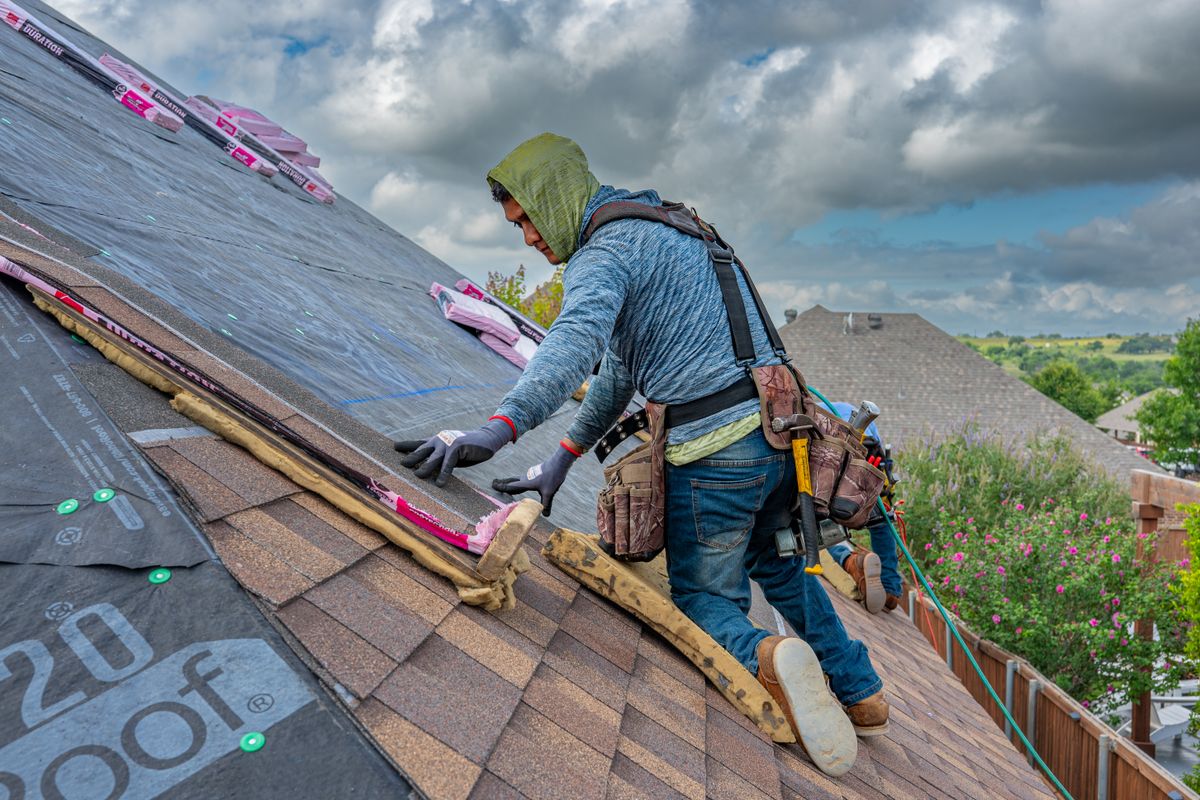
The roofing industry has never been short on new technology to sell contractors, drones, satellite measurement, digital sales presentations, but the current wave of AI adoption looks different from most of what came before it. It isn't concentrated in a single flashy tool. It's spreading quietly through the parts of the business that never made for a good trade-show demo: estimating, scheduling, dispatch, and the follow-up calls that happen after a job is technically done. Industry surveys published this year point to a real jump in AI usage among commercial and residential contractors compared to a year earlier, and roofing companies that have adopted it aren't necessarily the biggest shops, they're the ones that had a specific back-office bottleneck they were trying to solve.
Estimating is the clearest early win
Of everywhere AI shows up in a roofing business, estimating has been the fastest and most obvious adoption point. Photo-based and aerial measurement tools that used to require a specialist to interpret now generate a workable scope in minutes, and several of the estimating and management platforms built specifically for roofing, AccuLynx and JobNimbus among the more established names, have leaned into that shift rather than treating it as a threat to their existing workflow. Operators using these tools report that the time from inspection to a written estimate has compressed meaningfully, though the honest ones are quick to add that the AI-generated scope still needs a human to sanity-check it against what the inspector actually saw on the roof.
Roughly how many inbound calls do you take in a week?
Tap to start. 5 quick questions, then see your monthly number.
Scheduling and dispatch are catching up
The second wave of adoption is showing up in scheduling and crew dispatch, where AI-assisted routing tools are helping office staff figure out which crew should go where, in what order, without a dispatcher manually working a whiteboard. For a storm-chasing or insurance-heavy roofing company running multiple crews across a wide territory, that's a meaningfully different problem than a single-crew local shop faces, and the tools built for the larger, more complex operations are the ones showing the clearest returns so far.
The roofing companies getting real value from AI aren't the ones chasing the newest tool. They're the ones who had already mapped exactly where their business was leaking time, on the phone, in the office, between the inspection and the estimate, and then went looking for something that fixed that specific leak.
Follow-up and lead response is the underrated third category
Less discussed than estimating or dispatch, but increasingly common, is AI-assisted follow-up: tools that make sure a lead who hasn't responded in a few days gets a check-in, or that a homeowner whose claim is pending gets a status update without someone in the office having to remember to send it. This category doesn't get the same attention at industry conferences as measurement or dispatch tools, but the operators using it point to it as the difference between leads that quietly go cold and leads that eventually convert weeks after the first contact.
The adoption gap is real, and it's about size, not appetite
Industry data this year has shown a meaningful gap between how quickly larger roofing operations are adopting AI tools compared to smaller, owner-operated shops, and the gap doesn't appear to be about interest. Smaller shops report plenty of curiosity about these tools, the barrier is more often the time it takes to evaluate and implement something new while also running the day-to-day business. That suggests the gap is likely to narrow rather than widen over the next few years, as more of these tools get built specifically for smaller teams rather than requiring the implementation resources of a larger operation.
What doesn't change
None of this replaces the fundamentals of the trade. No AI tool climbs a ladder, checks a tear-off for hidden decking damage, or builds the kind of trust with a homeowner that turns a one-time customer into a referral source. The roofing companies getting real value out of these tools treat them the same way they'd treat a good piece of equipment: something that removes friction from a specific, well-understood part of the job, not something that replaces the judgment of the people actually doing the work.
Where this is headed
The next stage of adoption, based on where the estimating and dispatch tools are already headed, looks less like a single AI feature and more like these capabilities becoming a baseline expectation across the platforms roofing companies already use. Within a few years, a roofing company evaluating new software probably won't ask whether it has AI-assisted estimating or scheduling. They'll assume it does, and the real differentiator will go back to what it always was: how well the tool fits how their specific crews and office actually work.
Most shops lose more booked work at the phone than they realize. See your monthly number.
See my number →